Monday, December 22, 2014

EASY LATIN HOLIDAY RECIPE BY THE HISPANIC-FOOD-NETWORK

This article is going to be very subjective. This is going to be a work in progress over the next few days. But I felt compelled to put together what I consider the best Hispanic/Latin Christmas recipes. They're not going to be in any particular order. When choosing these recipes I considered time of preparation, are families typically involved in its creation and is it something that Hispanic traditions have been built around. 

For me it was always centered my Grandmother's kitchen. My Abuela Petra Prado-Gonzalez is a wonderful cook. Her condo in Miami is always filled with fresh smell of Puerto Rican dishes. Until this day I haven't tasted Arroz con Pollo, rice and beans, Tostones or Pasteles like hers. She gave me a great sense of what Caribbean food should taste like. From now until the day I pass on God's great Earth Puerto Rican food will always be my favorite.

In Hispanic Culture, no matter if we are Puerto Rican, Mexican, Cuban or anything else the glue that binds us all is the recognition that our food defines our respective nations. It gives us distinction, flavor, aroma and a feeling that although our language is the same...there is something very different about all us. With all this pontificating it's making me hungry. So let's get to may favorite Christmas Recipes.


Make the dough one day ahead. It is easier to handle when it's cold and it won't be so hard on the cook. Have a pastel-making get-together with your friends. The time will pass quickly if you are having fun with friends and are listening to Puerto Rican music. We do it all the time and it's great fun.

If you are making a bunch of pasteles order the guineos from your local produce vendor. They sell to grocery stores and can be found in the yellow pages. Tell then that you want them very green and not to "gas" them. You can buy them by the case dirt cheap.

Masa (dough)

1 1/3 lbs. yautía
3 lbs. guineos verdes
1 lbs. potatoes
1 green plantain
2 tbsp. milk
¼ cup achiote oil salt

Relleno (filling)

¾ lb. pork, chopped in small pieces, seasoned with "adobo" - or buy coarsely ground pork.
2 tablespoons "achiote" oil
3 oz. chopped ham
½ chopped onion
2 chopped garlic
4 ajíes dulces - chopped
3 recao leaves chopped (may use cilantro instead)
1 -8 oz. can tomato sauce
½ can garbanzo beans
½ cup cooking olives with pimento, chopped
1 -6 oz. can chopped pimentos
1 tsp. salt
1 tsp. black pepper
1 tbsp. orégano

Other

Banana leaves (or aluminum foil & butcher paper)
If you have just a few plantain leaves you can cut them in small pieces and add a piece to each pastel to improve the flavor.
½ cup achiote to grease the plantain leaves or paper.
string to tie pasteles
A large pot of boiling salt water

Masa (dough)

HINT - Boil the green bananas for a few minutes until the peel begins to turns black. Then you can just pull off the peel and grate the guineitos in the food processor. Make sure you don't leave them in the pot too long.

Peel the rest of the vegetables, rinse them and grate in a food processor. Add milk, oil, and salt. Mix well, cover, and refrigerate for at least one hour.

It is best to do this the day before actually putting the pasteles together. It makes for easier handling masa.

Relleno (meat filling)

Heat the oil in a "caldero" and cook the meat and ham for about 5 minutes over medium heat. Add the rest of the ingredients. Cook on low for approximately 25 minutes until the pork is completely cooked. Cool.

The Wrapper (use either banana leaves or aluminum foil)

Banana leaves. Use 10 bundles of plaintain leaves. Remove the central ridge on each leaf. Divide leaves into pieces, about 10" square. Wash and clean leaves with a damp cloth and blanch them (toast them slightly over gas stove flames).

If you have just a few plantain leaves cut them in small pieces and add a piece to each pastel for more flavor.

Aluminum foil.Use aluminum foil with butcher paper or plastic wrap on top to make a "wrapper." You may add a piece of banana leaf (if available) right on top.

Assembling the pasteles

(Cover the kitchen counter with newspaper for easier cleanup time)
Turn on your Puerto Rican music. . . .

Grease center of the wrapper - using the back of a spoon dipped in achiote oil.

HINT - Use a ½ cup measuring cup to scoop dough (this helps keep the pasteles the same size). In the center of the wrapper place ½ cup of dough and thinly spread it not more than 5" long and about 4" wide. Keep a small ruler handy to determine size until you can "eye-ball it."

HINT - Use a 1/8 cup measuring cup to scoop the meat filling and fill just a bit over the brim. That should measure 2½ tablespoons. Place 2½ tablespoons of meat filling on the masa - a bit off the center.

Fold the wrapper in half to close the pastel. If using foil, fold the edges over until tightly sealed. If using leaves just fold one over the other until completely sealed.

Tie the pastel. (You may skip this part completely if you are using foil paper - simply make sure the folds are pressed securely.) Tie the pastel with string to hold it together. Make one run of string lengthwise and two runs the other way (see picture above). This will hold the banana leaves secure.

Got leftover dough? Make alcapurrias.
Cook the pasteles for 1 hour turning them once half way through cooking. Freshly cooked pasteles taste much better. Freeze them raw.

Saturday, December 20, 2014

Healthy Huevos Rancheros From The Hispanic Food Network

Huevos rancheros or “ranch eggs” is a classic Mexican dish that is great for a quick dinner. Traditionally, it's made with a red tomato-based sauce. Here we use tart and tangy green salsa instead. Serve with: brown rice and slices of avocado.

4 servings Active Time: 30 minutes | Total Time: 30 minutes

Ingredients
  • 1 1/2 cups very thinly sliced romaine lettuce
  • 1 scallion, sliced
  • 2 tablespoons chopped fresh cilantro
  • 3 teaspoons canola oil, divided
  • 2 teaspoons lime juice
  • 1/4 teaspoon salt, divided
  • 1/4 teaspoon freshly ground pepper, divided
  • 1 15-ounce can pinto beans, rinsed
  • 1/2 cup prepared green salsa , (see Tip)
  • 8 6-inch corn tortillas
  • Canola oil cooking spray
  • 3/4 cup shredded sharp Cheddar cheese
  • 4 large eggs
Preparation
  1. Preheat oven to 400°F.
  2. Combine lettuce, scallion, cilantro, 1 teaspoon oil, lime juice, 1/8 teaspoon salt and 1/8 teaspoon pepper in a bowl; set aside. Combine beans and salsa in another bowl.
  3. Coat both sides of each tortilla with cooking spray. Place tortillas on a large baking sheet in 4 sets of overlapping pairs. (Each pair should overlap by about 3 inches.) Spread about 1/3 cup of the bean mixture on top of each pair of tortillas and sprinkle with 3 tablespoons cheese each. Bake until the beans are hot and the cheese is melted, about 10 minutes.
  4. Meanwhile, heat the remaining 2 teaspoons oil in a large nonstick skillet over medium heat. Crack each egg into a small bowl and slip them one at a time into the pan, taking care not to break the yolks. Season the eggs with the remaining 1/8 teaspoon salt and pepper. Reduce heat to medium-low and cook undisturbed for 5 to 7 minutes for soft-set yolks. (For hard-set yolks, cover the pan after 5 minutes and continue cooking until the yolks are cooked through, 4 to 6 minutes more.)
  5. To assemble, place an egg on top of each pair of tortillas and top with a generous 1/4 cup of the lettuce mixture.
NutritionPer serving : 396 Calories; 18 g Fat; 6 g Sat; 5 g Mono; 234 mg Cholesterol; 42 g Carbohydrates; 20 g Protein; 8 g Fiber; 563 mg Sodium; 474 mg Potassium

2 Carbohydrate Serving

Exchanges: 2 starch, 1 vegetable, 2 medium-fat meat, 1 fat

Tips & Notes
  • Tip: Green salsa (sometimes labeled salsa verde or tomatillo salsa) is made with tomatillos, green chiles and onions. Look for it near other prepared salsa in large supermarkets.

Wednesday, December 17, 2014

THE STORY OF THE TRES FIESTAS FAJITA

Enchilad Platter
     TRES FIESTAS ENCHILADA PLATTER
There's some people in this world that you just can't help but like. They have a certain feel about them. Their energy is positive. You can tell that they carry a certain level of wisdom and their willingness to share that is what makes them so endearing. To this day, one of my favorite people I ever interviewed was Ramon Mora, owner of Tres Fiestas in Airway Heights, Washington.
LOG ONTO OUR WEBSITE

Ramon has built quite a following in the town just outside of Spokane, WA. I lived in Spokane 7 years. I'd been to just about every Mexican restaurant in the Inland Empire by the time I visited his restaurant. I have to say, Tres Fiestas is one the top 3 best Mexican restaurants in all of Eastern Washington, if not the best. 

The reason why is simple. Ramon takes his time with his meats. The way he prepares food is authentic. He makes it with love, patience, kindness that you won't find in other restaurants. 

In this particular interview I conducted we just talked about food, his experience and philosophy on preparation.
What drew me to Tres Fiestas was the Fajitas I had heard about it. Ramon says the key to his great Fajitas is the meat. He marinates the meat and broils it when preparing. Wonder what's in the marinade? How about this: orange juice, burgundy, Italian sauce, beer and a condiment from the Yucatan called Achiote

For Ramon Mora, everyday is like living the American Dream. He came to Seattle in 1979 and worked in restaurants for years until he finally opened his own restaurant. He and his wife Maria work the Tres Fiesta together and he says it's great to have his wife by his side. "Yes it's great to have family here. And it's great the customers get to know us. We have a lot of repeat customers who love the food and enjoy the atmosphere," says Mora.

I hope by now you're hungry! On this day we had a beef fajita dish that was amazing. Please click on the video to check it out. And if you're ever in the Spokane area please visit Ramon in Airway Heights and tell him Mike Gonzalez and the Hispanic Food Network sent you. Adios!

Thursday, December 11, 2014

Mango Salsa Recipe

Mango Salsa is a fun way to enjoy an easy Mexican recipe wit the fresh flavors of a Tropical island. Whether it's a dinner party, friends over for the football game or a way to keep the kids full before dinner...Mango Salsa with blacks beans is a delicious way to infuse flavor and taste.


FROM OUR AMIGOS AT KRAFT


time
prep:
15 min
total:
1 hr 15 min
servings
total:
6 servings
what you need
1
can  (15 oz.) black beans, rinsed
1
 mango, chopped
1
cup  drained canned corn
1
 each red and green pepper, chopped
1/3
cup  MIRACLE WHIP Dressing
2
Tbsp.  TACO BELL® Thick & Chunky Salsa
1/4
tsp.  chili powder
make it


COMBINE beans, mango, corn and peppers in large bowl.

MIX remaining ingredients until blended. Add to bean mixture; toss to evenly coat.

REFRIGERATE 1 hour.


TACO BELL® and Logo are trademarks owned and licensed by Taco Bell Corp.
kraft kitchens tips
SUBSTITUTE
Prepare using MIRACLE WHIP Light Dressing.
servings
total:
6 servings
healthy living information
Good source of fiber
Good source of vitamin A or C

Diabetes Center
carb choices
carb choices:
2
diet exchange
1 Starch + 1/2 Fruit + 1/2 Fat
nutrition bonus
Not only are the mangos and peppers in this colorful side salad an excellent source of vitamin C, but the beans also provide a good source of fiber.
nutritional info per serving 

Tuesday, December 9, 2014

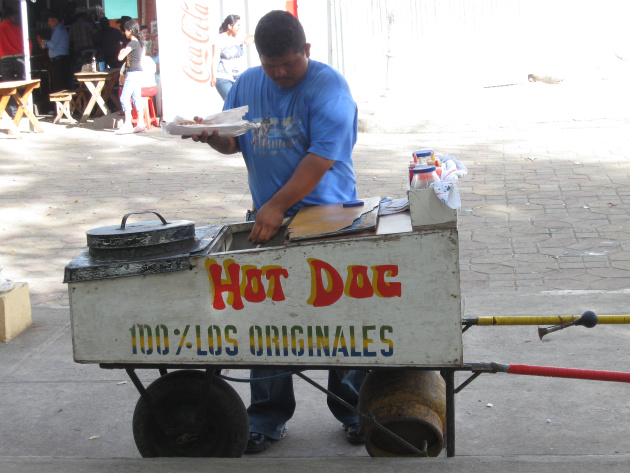
Salvadorean Hot Dog

hotdogelsalvador hotdogs1 tortilladog

What is more American than hot dogs? – At least that’s what I used to think.

I remember the first time I proudly served Carlos hot dogs. They were perfectly grilled in a nice soft bun. On the table – ketchup, mustard and relish so he could put whichever combination he liked. After we ate I asked him what he thought of our dinner. His response? “They were okay… but I like the hot dogs in El Salvador better.”

Qué qué?! Hot dogs in El Salvador? … When I was actually able to accept that they do indeed eat hot dogs in El Salvador, (and I later found out that there are variations around the world!), I refused to accept that they could be better than AMERICAN hot dogs – because hot dogs are from “AMERICA.” … {Star Spangled Banner plays in the background} … I never knew how patriotic I was until he insulted our hot dogs.

Well, over the years, I’ve come to accept that even though I’ve brainwashed him into liking peanut butter and jelly and other such American delicacies, he will always believe Salvadoran hot dogs are superior to American hot dogs. He still talks about the hot dog vendors in the streets of El Salvador in the same way one would wistfully describe a beloved girlfriend they had left behind.


I have even tried to accommodate my husband by preparing the hot dogs in a more Salvadoran fashion. Per Carlos’s instructions, this involves:

• Slicing the hot dogs in a spiral
• Making sure the hot dog is cooked well done (either grilled or fried in oil)
• Toasting the bun
• Preparing a cabbage & mustard topping

I don’t know if that is officially a “Salvadoran hot dog” – but that’s how he’s asked me to make them. Here is how I make the cabbage topping.

___

Salvadoran Cabbage Topping for Hot Dogs

You need:

1/2 a small cabbage head shredded
yellow mustard
salt and pepper
oil

Method:

Heat a few tablespoons of cooking oil in a pan over medium-high heat. Add cabbage – frying while stirring for a minute. Add a few tablespoons of mustard. Continue to cook until cabbage caramelizes a bit, but don’t cook until soggy. Add salt and pepper to taste. Serve on top of hot dogs.

___

As for Suegra, she goes one step further – she eats her hot dog inside of a tortilla.

Saturday, December 6, 2014

Authentic Columbian Recipe from www.hispanicfoodnetwork.com

Bandeja Paisa (Paisa Platter)
Authentic Colombian Recipe

by ERICA DINHO AT MYCOLOMBIANRECIPES.COM


For great Hispanic Recipes visits www.hispanicfoodnetwork.com

Bandeja Paisa is probably the most popular Colombian dish, originally from the Andean region of the country where the people are called “Paisas” and the area where I was born and raised.


Bandeja paisa is something I’ve eaten all of my life and if I have to choose my last meal on this earth, this is the one. Tradionally, Bandeja paisa includes beanswhite rice, chicharróncarne en polvo, chorizo, fried egg, ripe plantain, avocado and arepa, but you can substitute the powdered beef for grilled beef or pork. I usually make the beans and powdered beef the day before to make it easier.


Other Popular and All-Time Favorite Traditional Colombian Dishes: Empanadas Colombianas (Colombian Empanadas),  Sancocho de Gallina (Chicken Sancocho),Ajiaco Bogotano (Chichen and Potato Soup), Pandebono (Cheese Bread), Buñuelos(Cheese Balls) and Arepas Rellenas de Queso.


Ingredients(4 Servings)


Directions
  1. Prepare the beans, hogao and powdered beef one day ahead and keep in the refrigerator.
  2. When you are going to serve the bandeja paisa, heat the beans and powdered beefand hogao. Make the chicharrones.
  3. Cook the white rice and plantains.
  4. Fry the eggs and chorizos.
  5. To serve, place the rice in a tray or platter and place the rest of the ingredients as you like. I prefer the beans in a separate bowl, but you can ladle the beans next to the rice if you like.
  6. Bring the hogao in a serving dish to the table, so people can place it on top of the beans if they like. Enjoy!